EASP PORTF0Li0
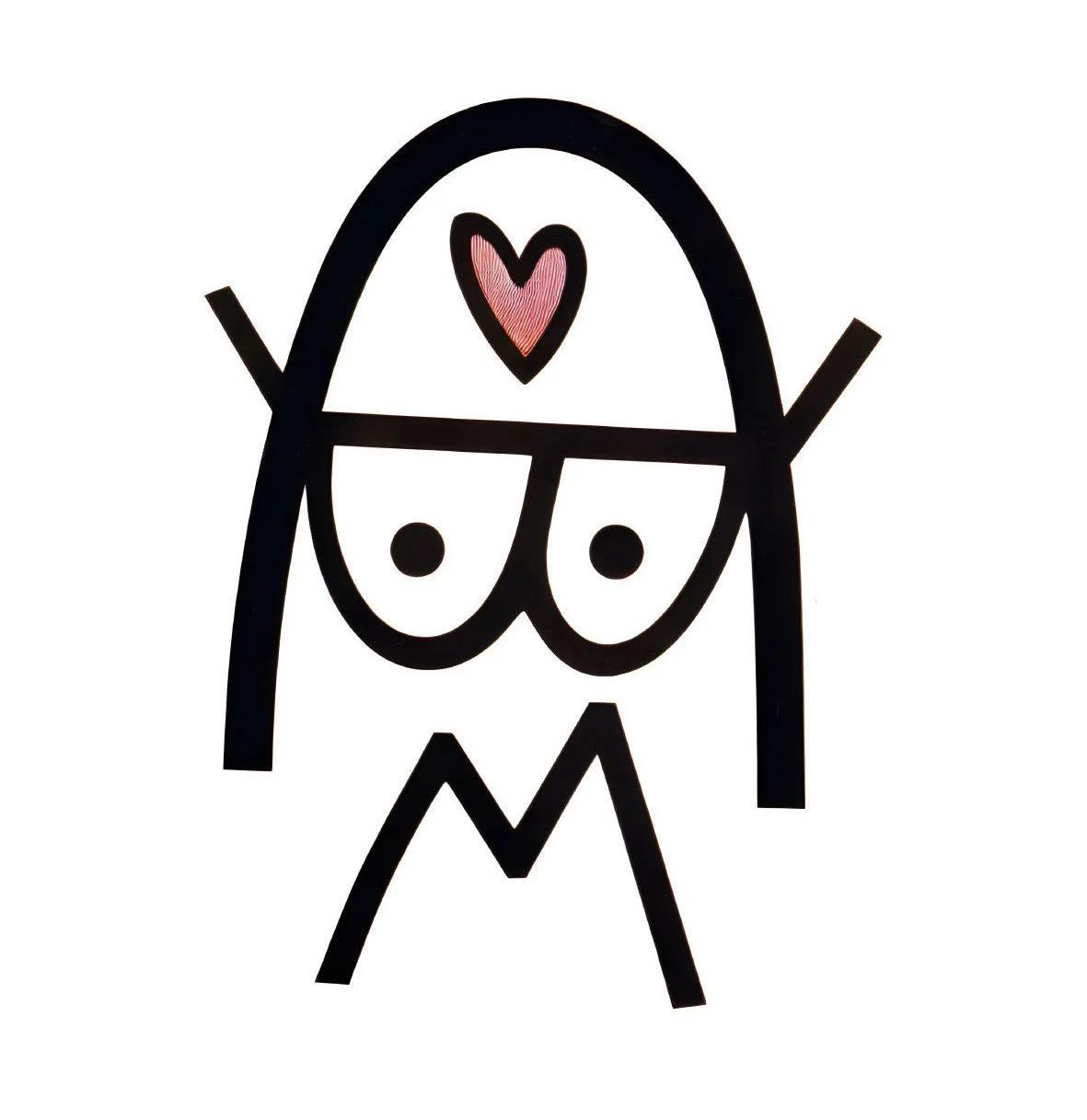
SELF PORTRAIT "FINGERPRINT" / JANUARY 2025 / doodle, illustrationThis illustration reimagines a doodle I first made in grade school; resurfaced and fully realized as part of my ongoing exploration into selfhood, pedagogy, and resistance to subordination. The figure holds the tension between frustration with “banking model” education and the social expectations that shaped my early self-concept. The heart - featuring a sample from my own fingerprint - interrupts the rigidity of the form, signaling my insistence on joy, vulnerability, and gut as counterweights to systems that stave expression. The piece reflects a commitment to remain unrelenting about instinct while pursuing deeper, self-directed understanding.
————————————————————
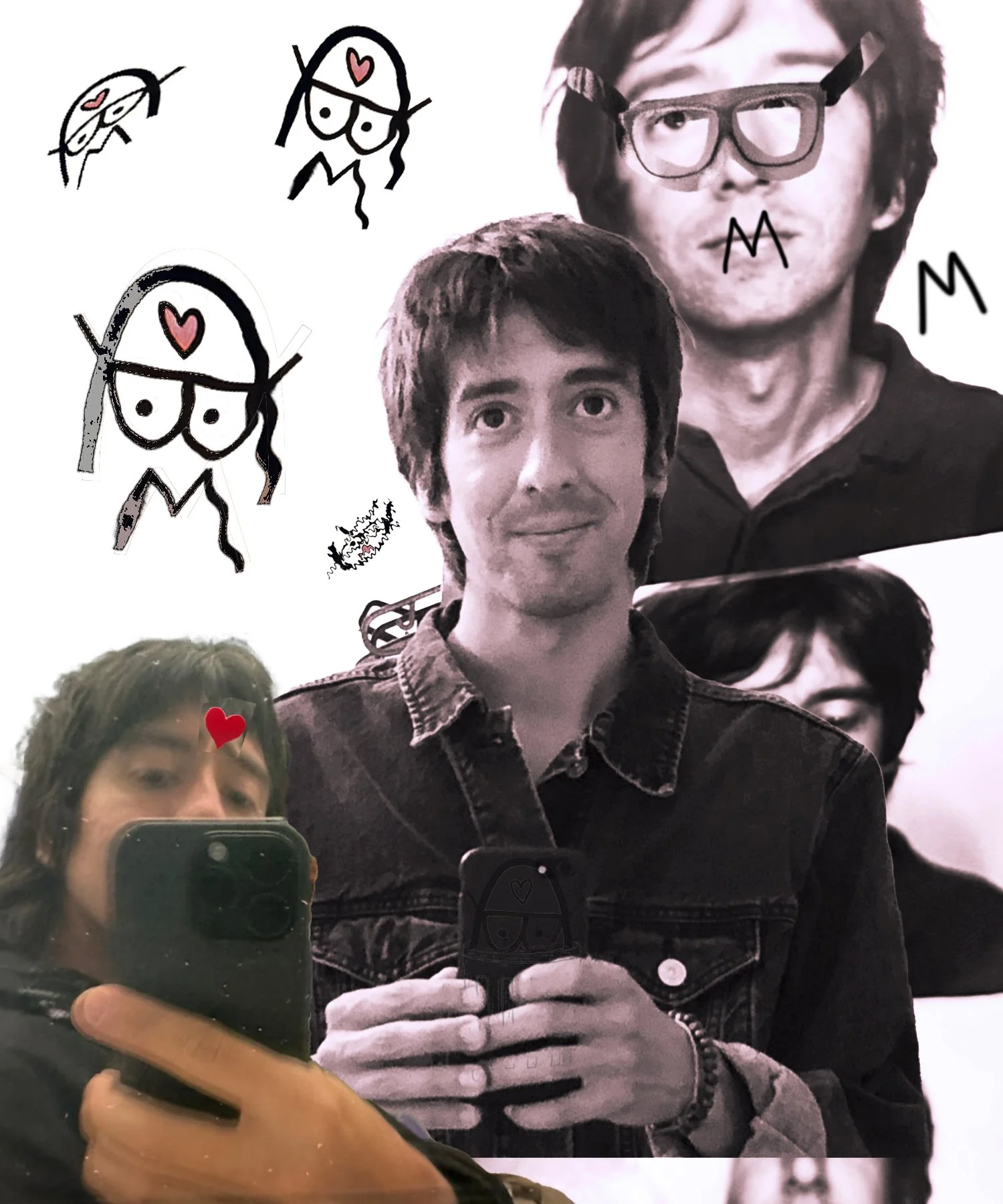
SELF PORTRAIT "BERLIN COLLAGE" / JUNE 2025 / photograph, digital collageOriginally used for a performance flyer, this collage layers casual selfies with digitally distorted hand-drawn figures and repeated motifs, creating a mediated self-portrait that oscillates between indifference and curiosity. By combining illustration and digital collage, the piece explores how identity is reproduced, distorted, and performed across images - especially within the constraints of social expectation and self-presentation. The selfies, taken in Berlin photobooths and in-transit, reference both pride and inquiry, while the corrupted doodles reintroduce a childlike mark-making that resists consequence. The result is an intentionally unstable portrait that treats self-representation as a site of play, refusal, and ongoing re-composition.
—————— _________________________________________________________________
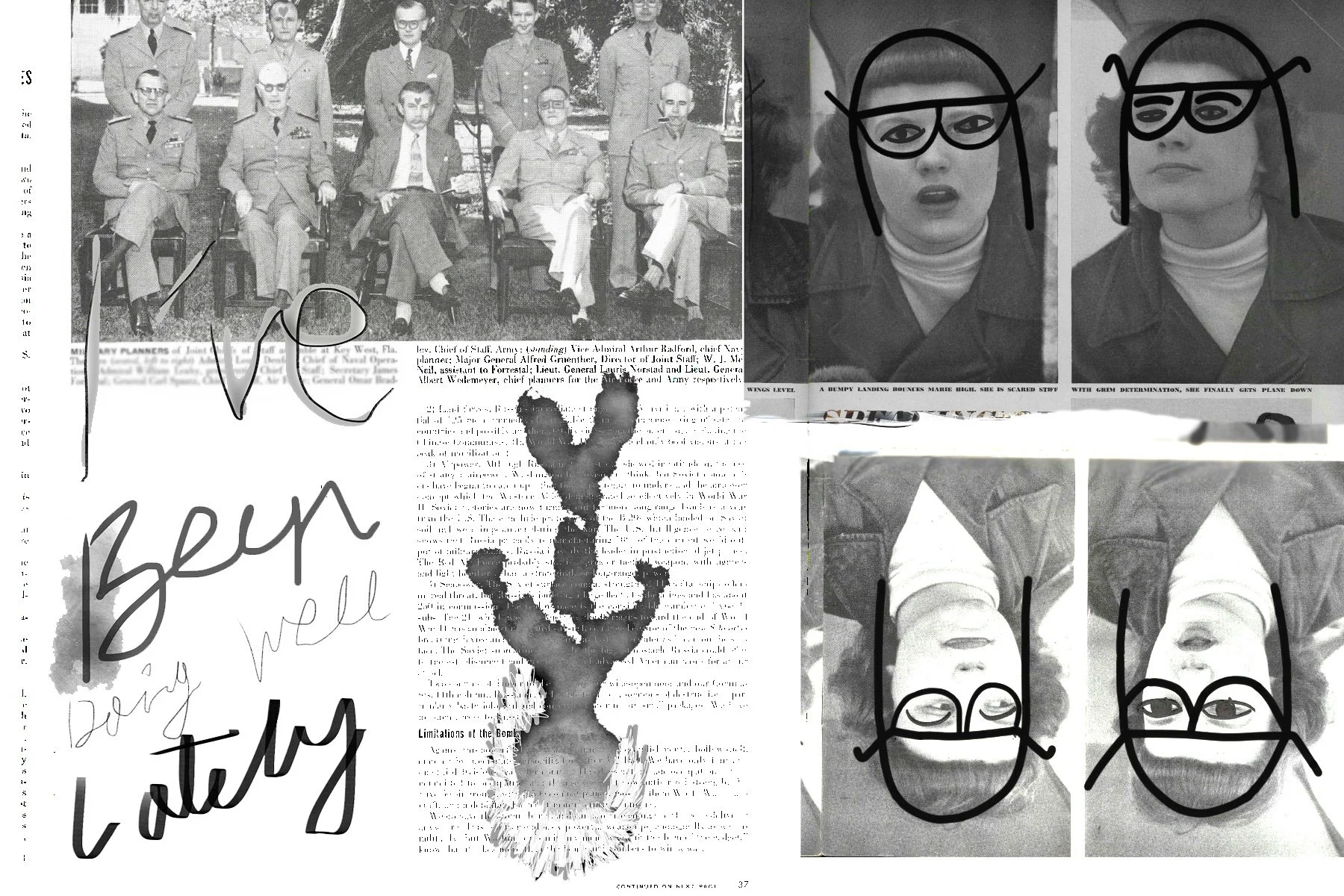
"I'VE BEEN DOING WELL LATELY" / NOVEMBER 2025 / journal, archive distortionThis work overlays archival photographs with iPhone illustration, journal fragments, and repeated portrait motifs to unsettle the authority of Cold War military archive. By intervening directly on found materials, the piece repositions the archive as a living, unstable site shaped by memory, annotation, and personal mythology. Marie Goerke, a civilian pilot whose early aviation narratives were often distorted by spectacle and gendered framing is shown here, interrupted once again by identity-trappings. The collage of text (“I’ve been doing well lately”) introduces an diaristic intimacy that invites vulnerability - juxtaposing the formal rigidity of the original photographs. Through these layered gestures, the collective piece becomes less about cohesion and more about revision, refusal, and the way identities are constantly repositioned across time.
————————-________________________________—————————————_______________
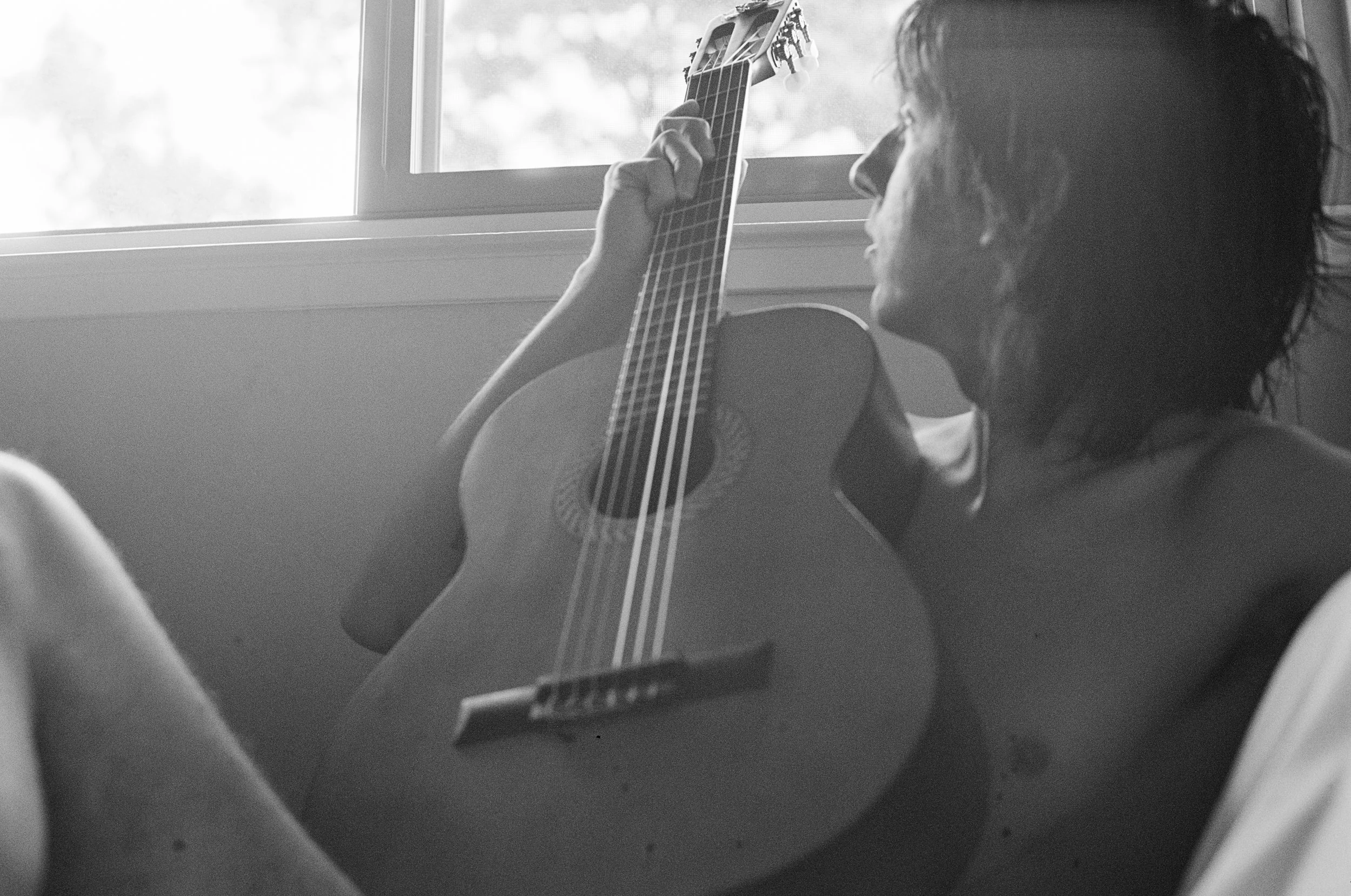
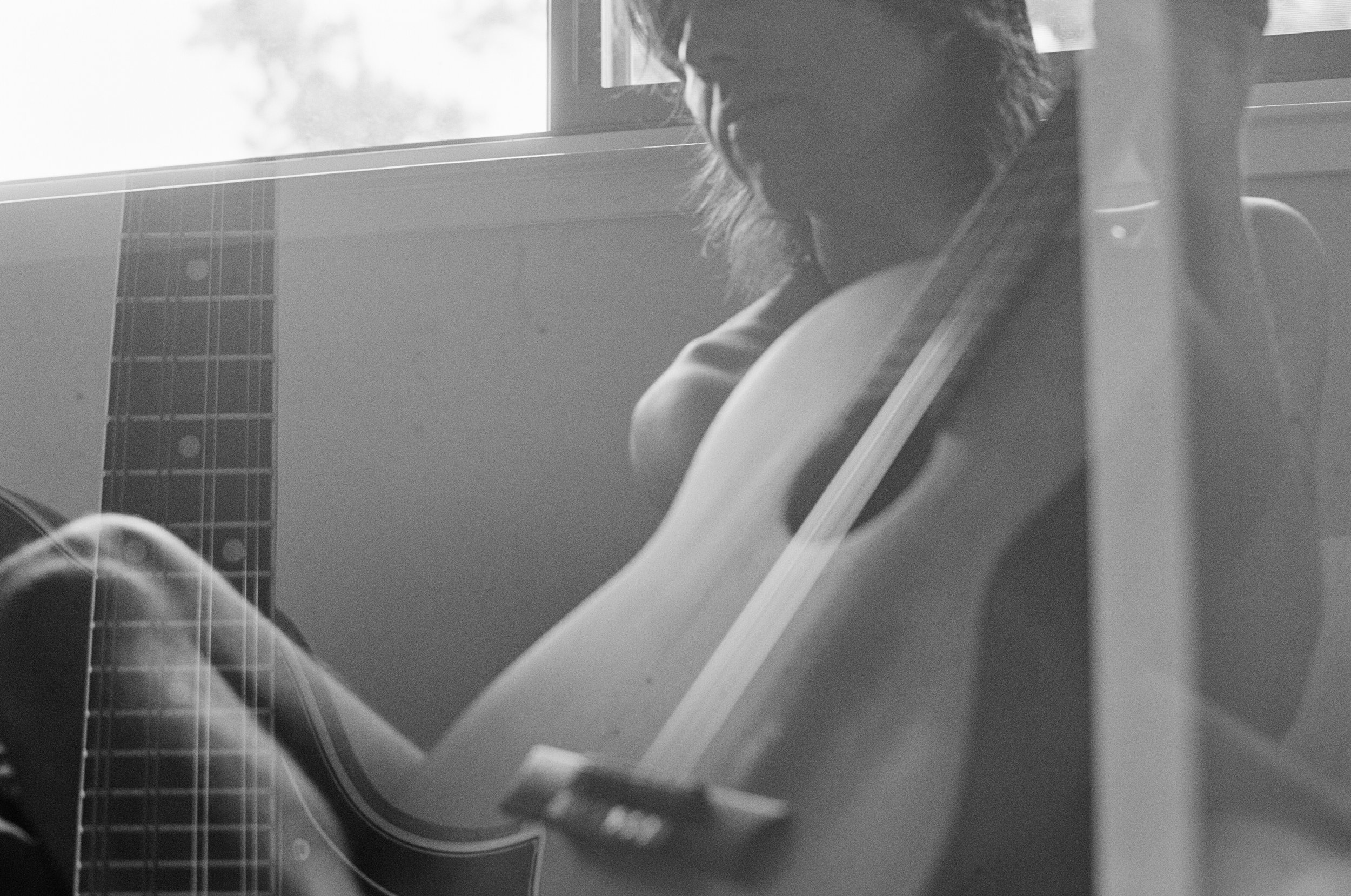
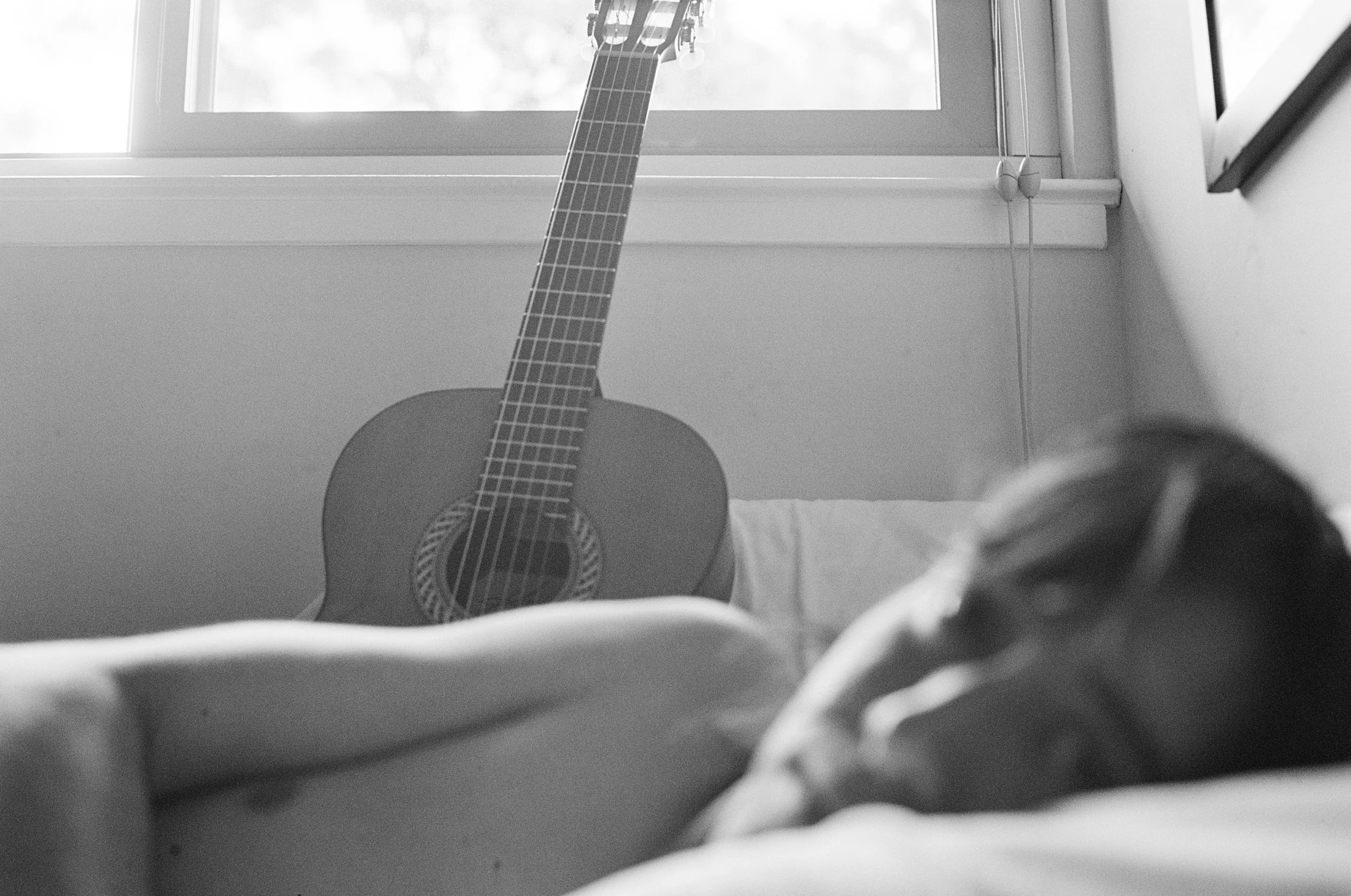
SELF PORTRAIT PHOTOGRAPHS / MAY 2024 / film, double exp.This series of self-portraits documents quiet, unguarded moments of my daily life - spaces where music, rest, and interior thought blur. Made with a simple handheld 35mm camera on black and white film, the images reflect my playful impulses within the solitude of an ordinary day. By turning the camera inward, I frame the self not as a fixed identity but as a living archive: a body in transition (with acne), held together by sound, memory, and the desire to keep creating despite living in a box. This series links my broader practice of anti-hierarchical image-making, using smallness and informality as a refusal of polish and a bow toward the beauty of the imperfection.
_________________________________——————-________________———_____———-_
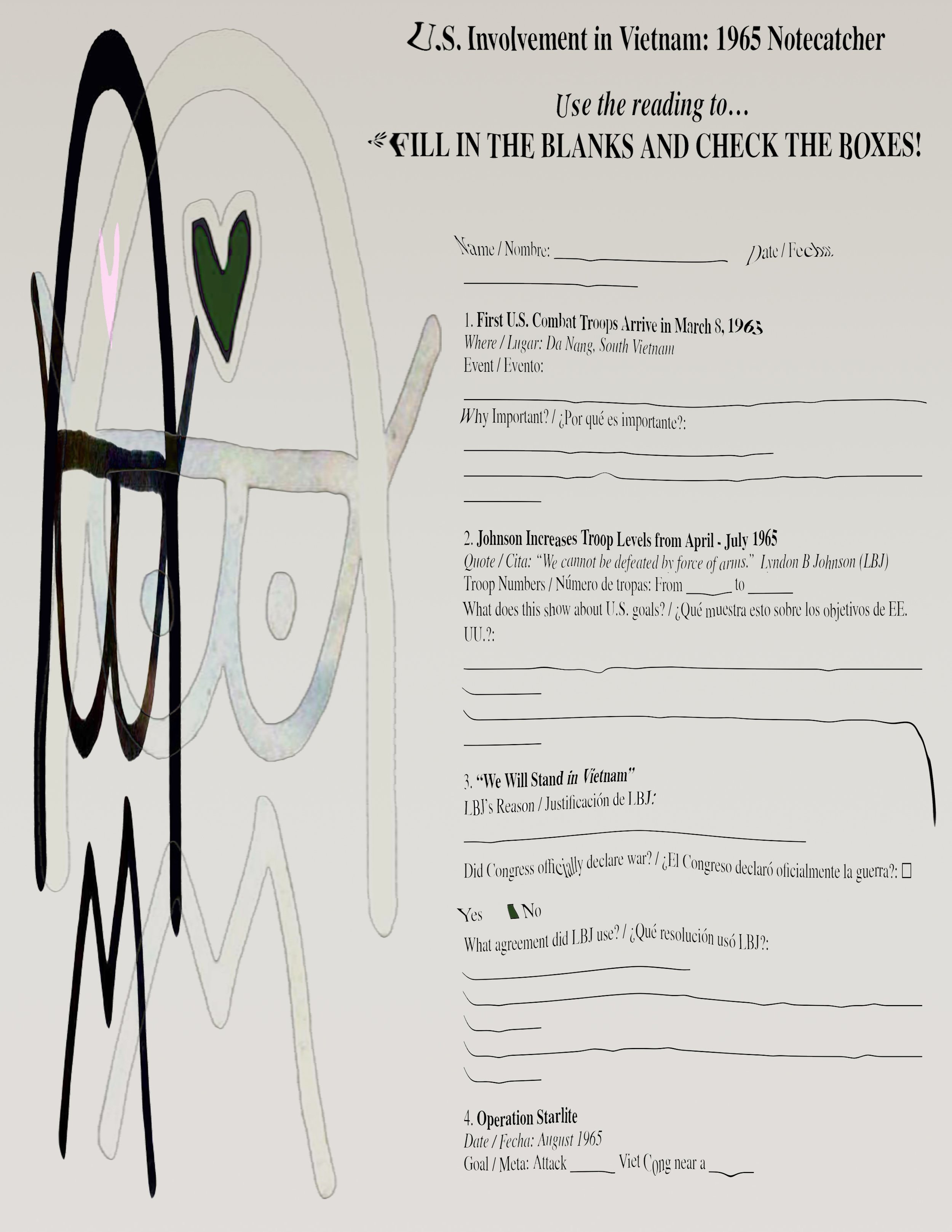
"CURRICULUM 1" / DECEMBER 2025 / labordocument, sabotage portraitur Curriculum 1 merges my classroom practice with my studio practice, treating curriculum design itself as an artistic gesture. Built for my high-school Special Education students, this lesson plan is an intersection between illustration, language, and pedagogy. The drawn figure functions as a recurring avatar throughout my work - an insistence on curiosity and refusal embedded within systems of domineering standardization. By placing this character inside a corrupted educational document, the piece questions how learning is structured, who it is structured for, and how imagination can exist even within joyless institutional constraints.
——————————————————————--
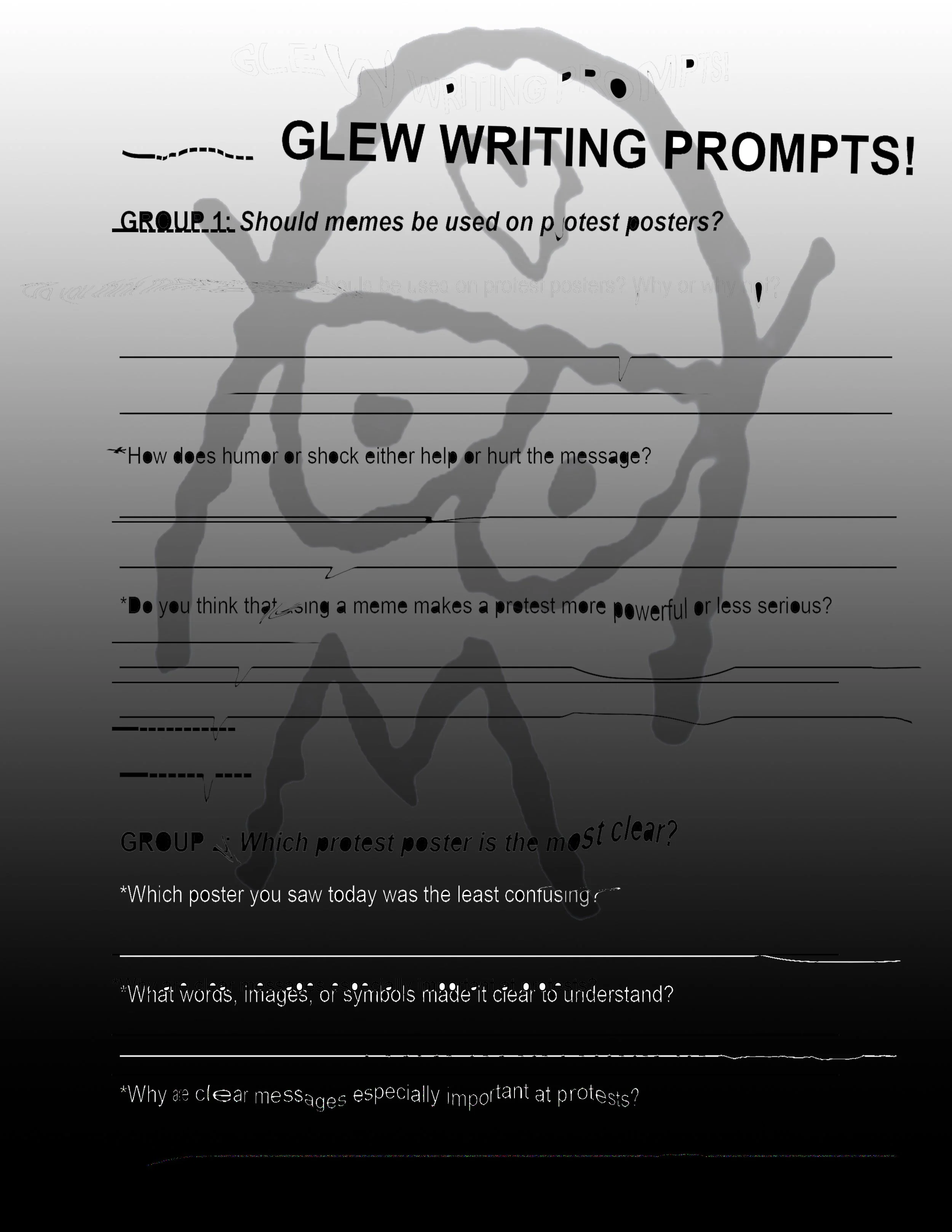
"CURRICULUM 2" / OCTOBER 2025 / labordocument, sabotage portraiturCurriculum 2 expands my inquiry into curriculum as an artistic and political form. Built for high-school Special Education learners, this lesson interrogates the role of memes in contemporary protest movements, specifically the visual similarities between the Portland frog and Pepe the frog and how humor, distortion, and viral shorthand can confuse political messaging. My recurring doodle-face intervenes directly in the text, modeling the very critique the lesson asks students to make: Who is being addressed here? What is being communicated? And what power does a simplified or exaggerated image actually hold? The work also draws from culturally relevant pedagogy, asking whether students see themselves - visually, linguistically, and politically - within the materials they are asked to analyze. By placing a hand-drawn/digitally disrupted self-portrait over a formalized educational document, the piece disrupts the neutrality of the assignment and makes visible the conflicts students constantly perform between institutional expectations and their feelings… Should memes be used on protest posters?
_________——-
"CURRICULUM 3" / NOVEMBER 2025 / labordocument, sabotage portraitur, videoCurriculum 3 extends the series into moving image and sound, pairing an iPhone voice memo of me strumming a prepared classical guitar with a slow scroll through a grad school community-mapping assignment. The discordant tuning becomes a metaphor for teaching within constraint - tradition informing apathy, structure conflicting with the realities of lived student experience. As the video moves through notes on supporting marginalized and unhoused families in Seaside, an animated version of my recurring doodle-face loops and twists across the screen. Created using a simple animation tool from a previous animation class, the figure becomes a kind of witness: offbeat, repetitive, insistent. It interrupts the document not to obscure it, but to emphasize its emotional stakes: that behind every intervention plan, metric, or protocol is a child tapping their foot or self-soothing within systems that were not built for them. The piece reflects my teaching praxis as relational and community-rooted, while also acknowledging the exhaustion embedded in institutional expectations. By layering guitar, bureaucratic text, and a small rebellious avatar, Curriculum 3 frames curriculum not as a static directive but as an ongoing compromise with the communities we participate in.
————————-___________
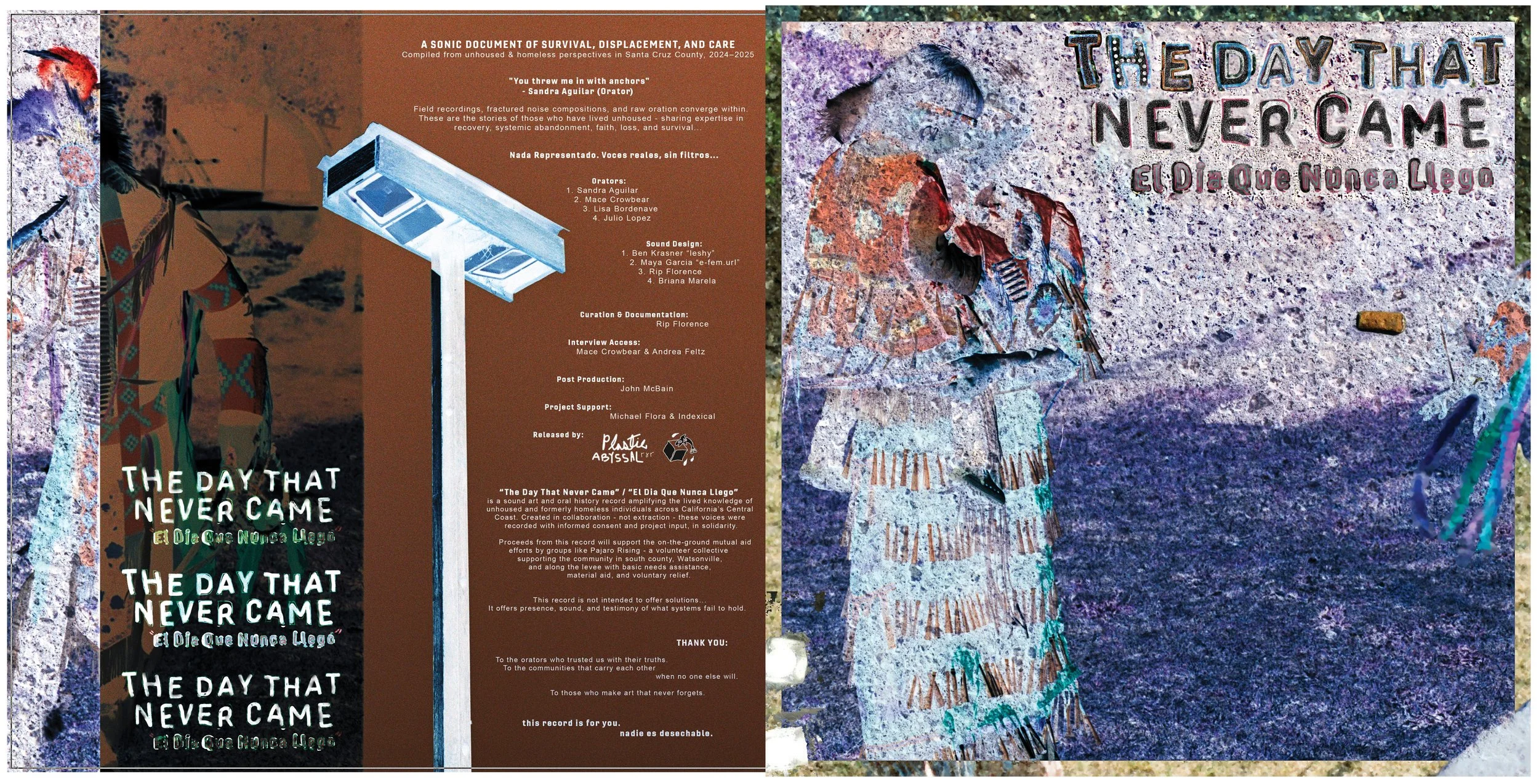
"The Day That Never Came / El Día Que Nunca Llegó" / OCTOBER 2025 / layout, collage, typeThe Day That Never Came / El Día Que Nunca Llegó is the album artwork created for a collaborative homelessness-justice sound project produced during my Indexical residency. The design merges gritty double-exposure film photographs, and my own compositional interventions to create a visual landscape of displacement, graffiti, survival, and Indigeneity. The cover centers orator, Mace Crowbear, via photographs taken at a Powwow in Watsonville we had attended in late 2024. The additional exposure adds layers of native gowns and silhouettes with eroded stone, street debris, and traces of the colonized environment. These overlays intentionally blur clarity - a refusal of the hyper-surveilled gaze imposed on marginalized people. The English/Spanish title and supplemental text reflects Santa Cruz County’s linguistic landscape and the project’s commitment to culturally sustaining accessibility. The piece operates both as documentation and counter-narrative: a political object that resists while honoring the emotional texture of lived experience. As part of a larger social-practice installation, the artwork functions as a portal into community memory, mutual aid, and the quiet infrastructures of care that rarely make it into public discourse.
________———______________________——————————————————————————
“Lisa Bordenave / rip florence” - The Day That Never Came / El Día Que Nunca Llegó / AUGUST 2025 / interview documentation, field recording, compositionAudio: https://drive.google.com/file/d/172wIxZjNIbcRlbMQHCosuxkAxR4dYRAG/view?usp=drive_link
This piece is a sonic accompaniment to Lisa Bordenave’s oration about living unhoused. Her 11-minute narration, condensed from our two-hour interview and centered on her most provocative and vulnerable reflections, (the full interview audio from all four orators will be accessible at the time of release), became the foundation for this work. I built the harmonic language from an amalgam of chord progressions common in Prince’s music (an artist she told me was her favorite): lush 7ths, suspended voicings, and unexpected modulations, translated into a palette of detuned classical guitar, piano, and synthesizer. The composition was performed in real time while listening to Lisa’s testimony. Every gesture - scrapes, swells, ruptures, sustained tones - was an immediate emotional reaction to her voice as she spoke about housing precarity, family, survival, and memory. I paired these improvisational responses with field recordings gathered from places tied to her story: grocery aisles, street corners, lighters flickering, train echoes, ambient noise from the Elkhorn Slough where she once lived unhoused. These were placed alongside everyday sonic textures of movement, hunger, waiting, and persistence. These recordings emerge throughout the piece at key narrative moments, weaving Lisa’s lived environment back into the oration. The work treats accompaniment as relational reactivity - blending Prince-inspired harmonic warmth with noise, disorder, and familiar environmental sounds to create a container spacious enough to hold the depth of her experience.
___________________________-_______
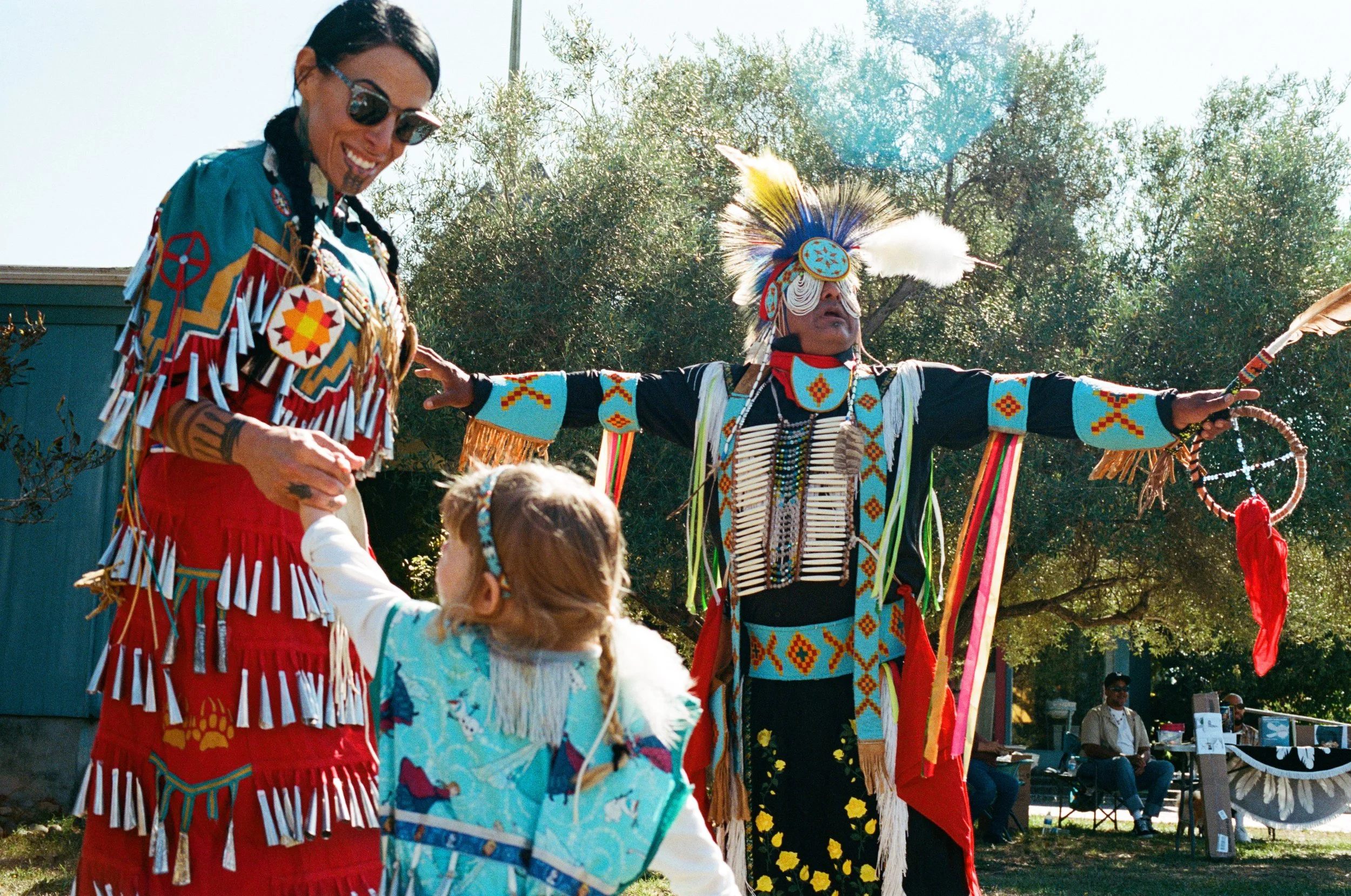
"MACE POWWOW 1" / JANUARY 2025 / film photographThis film photograph captures Mace Crowbear, a respected tribal member, mother, community organizer, and storyteller featured in The Day That Never Came / El Día Que Nunca Llegó, dancing with a friend’s young daughter at a powwow in Watsonville. Shot on 35mm color film, the image foregrounds intergenerational connection, care, and cultural continuity. Mace’s regalia - handmade, intricate, and alive with movement - contrasts softly with the child’s tentative, joyful reach, creating a moment where lineage and diversity meet. Within the broader exhibition, this image functions as a counterpoint to narratives of displacement: it honors Indigenx resilience, and the ceremonial spaces that ground community. The photograph reflects the exhibition’s commitment to portraying the fullness of lived experience, ceremony, and belonging alongside the histories of survival and systemic marginalization that shaped the orators’ stories. Shot with consent and proximity, the photo emerges from ongoing collaboration and trust built with Mace during the project’s development.
___________ ———————————————- ___———
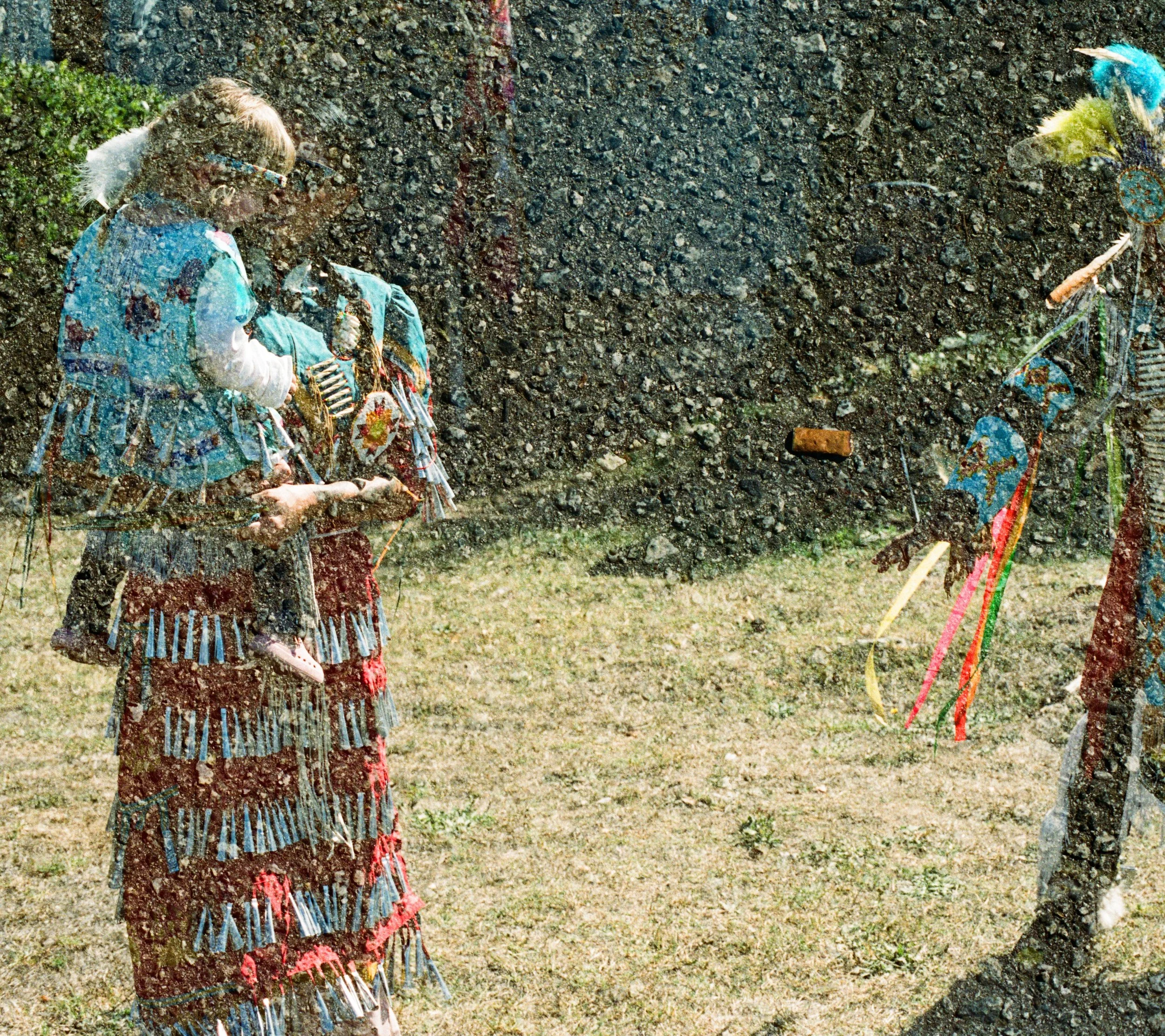
"MACE POWWOW 2" / JANUARY 2025 / film photograph, double exp.This double-exposure photograph layers two distinct but interdependent environments: a cigarette-strewn street surface and a moment of intimate care at a Watsonville powwow. In the central image, Mace Crowbear, a tribal leader and collaborator in The Day That Never Came / El Día Que Nunca Llegó, holds her friend’s young child in full regalia while her own son extends his arm outward in dance. Across the frame, the overlaid texture of pavement, debris, and a discarded cigarette hardens their bodies, creating an uneasy but deliberate tension between cultural continuity and the homogeny of everyday litter. The image was created in-camera on 35mm film, allowing the collision of the two scenes to occur organically rather than digitally arranged. That collapse - between celebration and survival, tenderness and contemporary hostility - became a guiding motif for the project’s visual identity. This photograph was used as the basis for the cover artwork of The Day That Never Came / El Día Que Nunca Llegó, and will be featured in-gallery at the exhibition. The image grounds the album in a visual language of endurance, lineage, and the fragile but persistent presence of Indigenous joy amid attempted erasure.
—————————————————————-
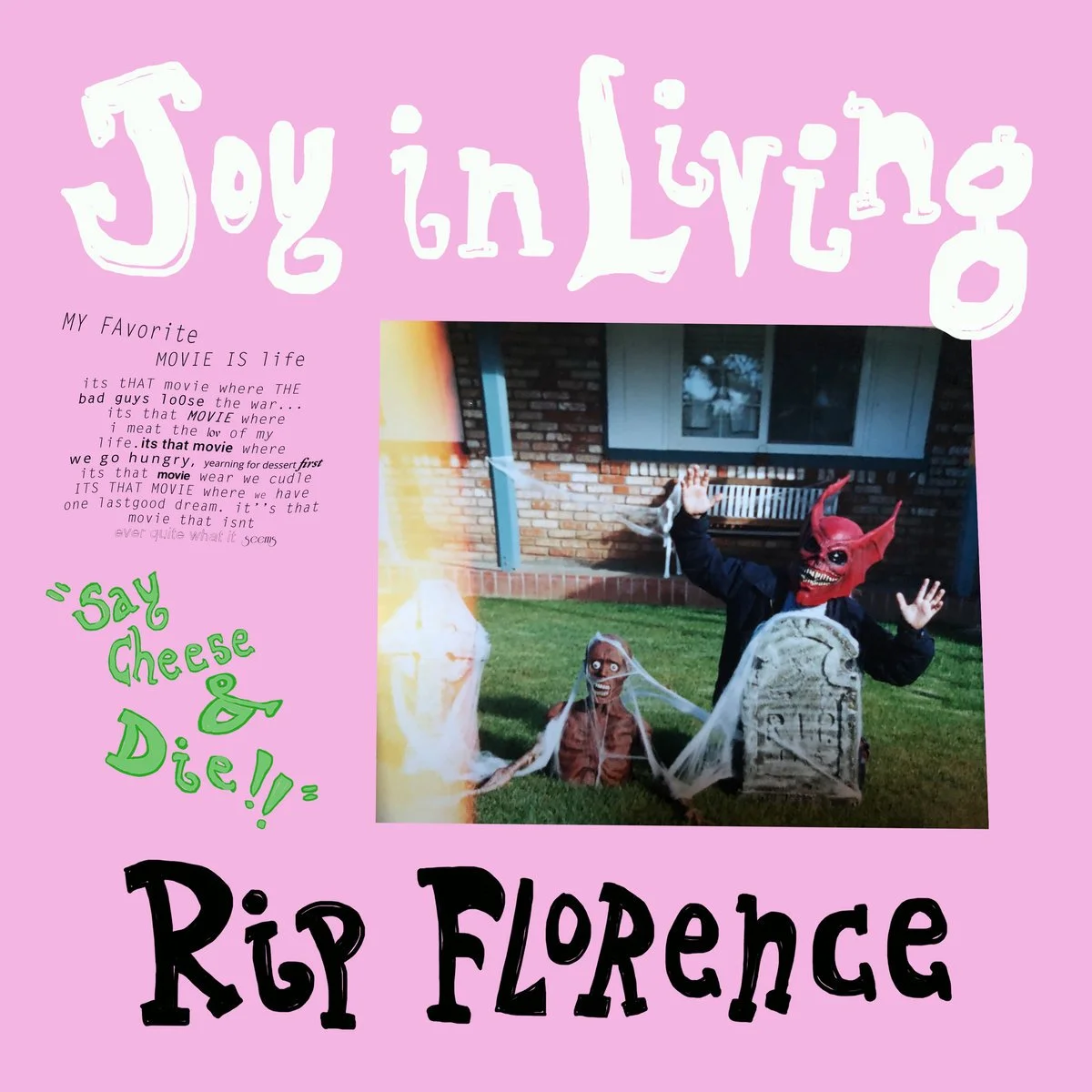
"JOY IN LIVING 'SAY CHEESE & DIE!!'" / JUNE 2022 / collage, sabot-homageThis album cover reframes a childhood photograph of me wearing a devil’s mask (an alternate visual motif to the doodle-face that recurs throughout my practice) into a celebration of life. Where the doodle-face functions as a self-constructed avatar of refusal, and anti-authoritarian play, the devil mask functions as its bizarro-form: a literal costume of early self-mythos. The artwork intentionally mirrors and distorts Ros Magorian’s “Joy in Living” album artwork, adopting its title, cadence, and visual cheerfulness while pulling it into an alternate, anti-hymn context. Magorian’s record is steeped in devotional chorus; sabotage becomes a gesture of historical revision: an ongoing thread in my work that often interrogates organized religion, inherited moral narratives, and the aesthetics of acceptable enlightenment. By placing a Halloween photo from my childhood home at the center of the composition, the piece collapses timelines: the past becomes a usable archive, repositioned as formative material for my current practice. The cover becomes both homage and disruption - an affectionate nod to Magorian’s work, and a speculative bridge toward a future project in which I plan to mash up both my album and Ros’, dissolving the boundary between source and remix, sincerity, satire, tradition and subversion.
——————————————-
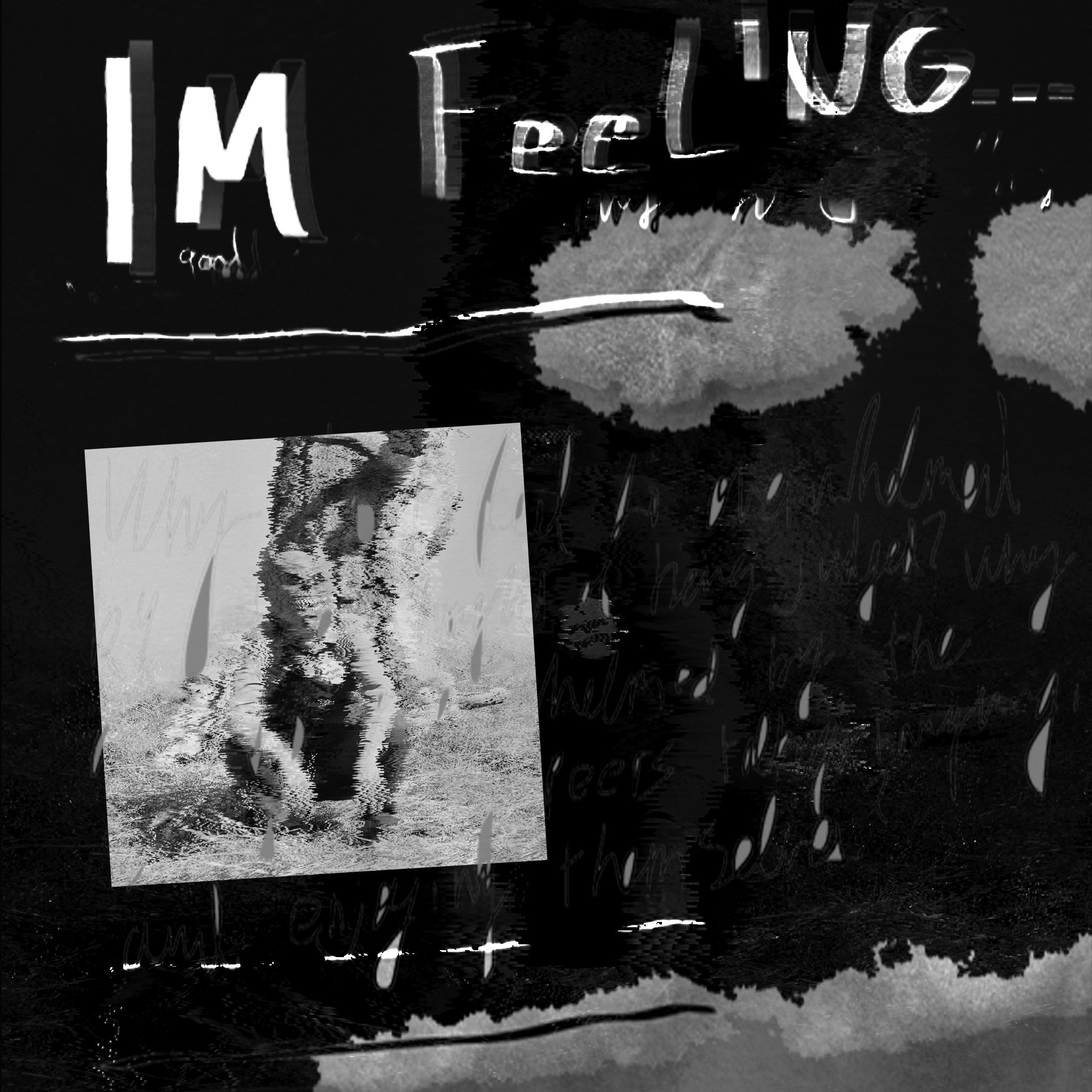
"I'M FEELING LUCKY" / DECEMBER 2025 / concept, glitch collageThis collage brings together two parallel archives of selfhood: excerpts from my current journal and a commissioned photograph taken by Naida Lindberg in 2024, in which I wear my childhood devil mask (also referenced in “Joy in Living”) and the Lucky’s grocery apron from my first job bagging groceries. The photograph - from a series exploring labor, early play, and early identity - was digitally fragmented, glitched via .txt edit, and reassembled before being embedded into a dense field of handwritten text, erasures, and emotional residue from my notebook.The piece explores how identity repeats, distorts, and sustains across time. The devil mask motif becomes a symbol of the identities and correlated morals we perform, while the Lucky’s apron anchors the image in working-class apathy and the formative mundanity of repetitive labor. By glitching the photograph and obscuring large portions of the journal text, the work resists nostalgia. Instead, it treats memory as unstable, spermicidal, and continually shaped by ego. What remains visible is a collision of emotional states: confession, frustration, and tenderness haunting both analog and digital realms.The collage is part of an ongoing investigation into labor, self-fiction, and the aesthetics of personal archive, asking how personal artifacts continue to shape the adult person’s emotional and political capacities.
_________————_______________________________________________——————————-
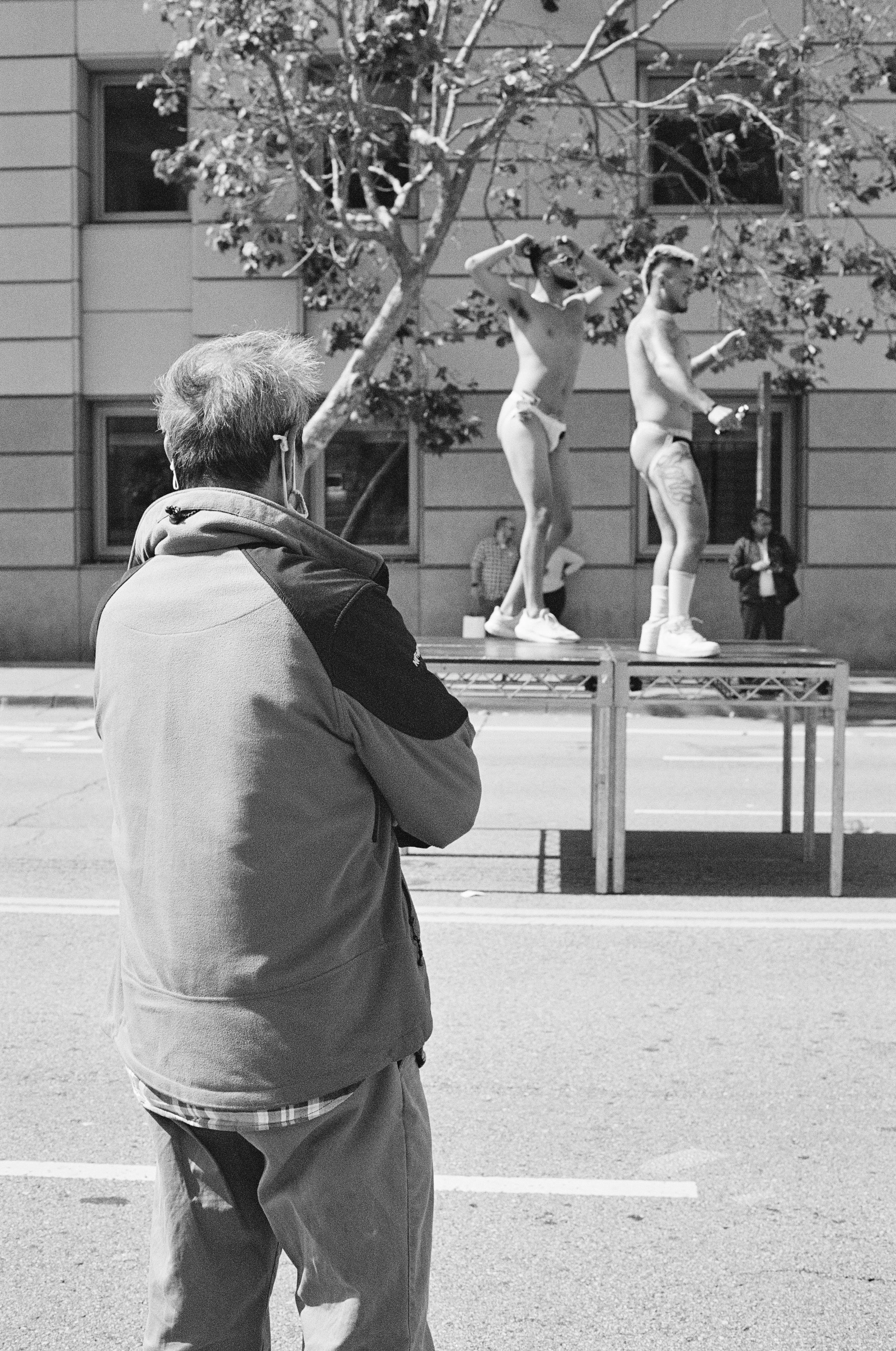
"SPECTATOR" / JULY 2024 / film photographThis photograph captures an unguarded moment in public space: a masked older man stands at a distance, watching two nearly nude performers dancing atop a temporary platform during a gay pride event in San Francisco. Shot on 35mm black-and-white film, the image heightens the tension between voyeurism, curiosity, and spectacle.The composition stages an encounter between bodies separated by age, posture, and intention - one anchored in observation while the others perform through gesture and sensual display. The photograph suggests a quiet friction between public intimacy and private interior: “Who is allowed to take up space?” “Who watches, and who is watched?” The work sits within my ongoing interest in documenting unscripted civic moments where everyday people, performers, and passersby occupy the same frame but exist in radically different registers. By withholding resolution, the image invites the viewer to inhabit the ambiguity of the scene: by observing the observer.
—___—
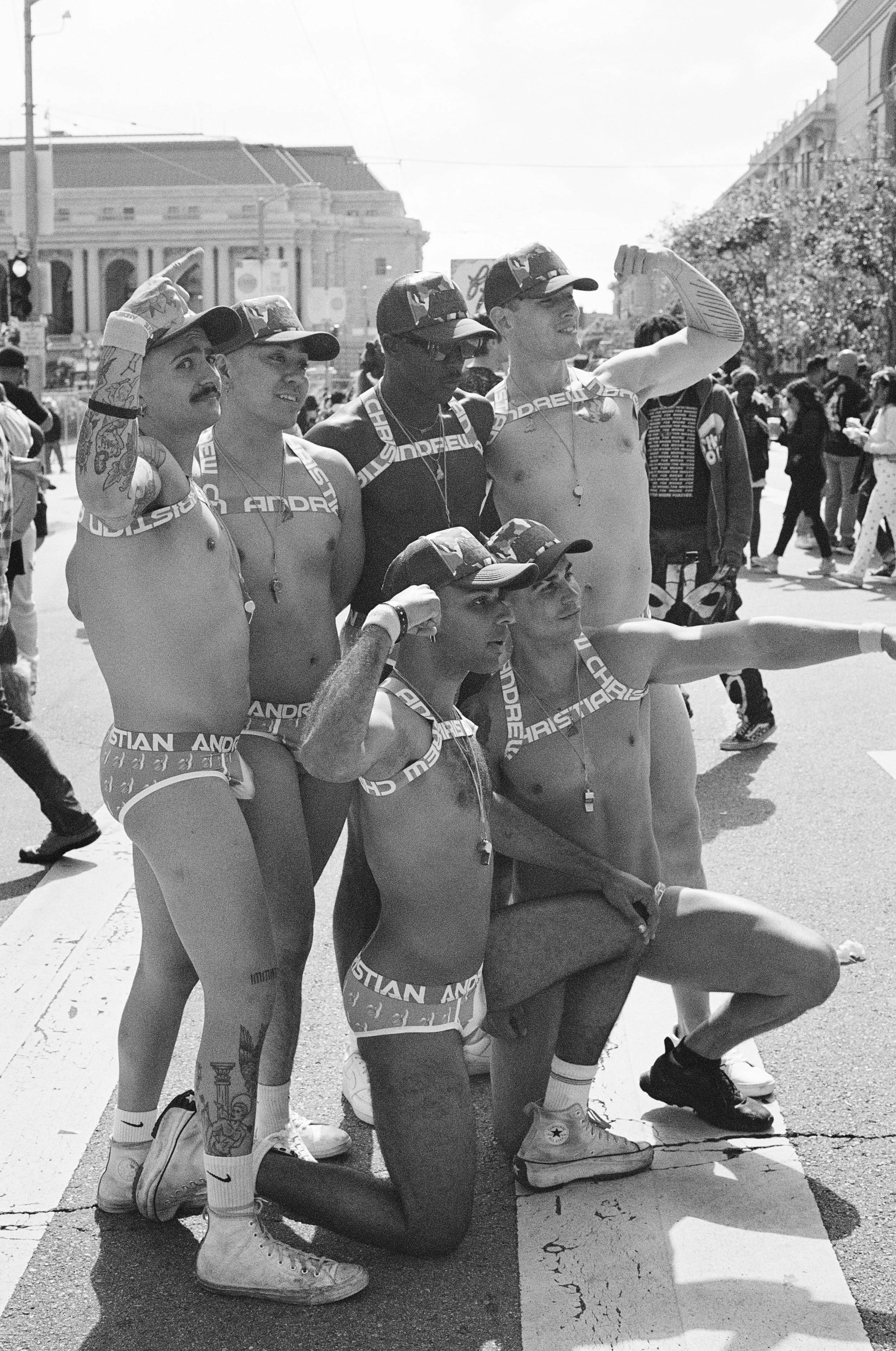
"PERFORMERS" / JULY 2024 / film photographThis photograph, taken on 35mm Canon with b&w film at San Francisco Pride, operates as a counterpoint to the “Spectator”. Where the earlier photograph foregrounds a single onlooker observing a distant stage, this image turns its attention toward the performers: posing, gesturing, and assembling their bodies into a moment of collective visibility. Their stances imply romanesque heroism, but the scene remains grounded in the everyday Castro street textures: sneakers, tape, sweat, shadows, and the casual choreography of queer celebration. Together, the two photographs form a short series about the politics of voyeurism. Spectator centers distance, ambivalence, and the solitary male gaze, while Performers centers proximity, collaboration, and the pleasure of being seen. One figure watches, uncertain. The other group offers themselves fully. The pairing reflects a thread in my practice - highlighting how public space becomes a site of conflicting narratives, where bodies negotiate power, culture, and play. The two images ask what happens when the gaze shifts: when we transition from the viewer to the viewed, and find different kinds of immersion and intimacy.
— —___ ______ ___ __—— —— —-
"IMG_7032" / DECEMBER 2024 / iphone document, data distortionThis short iPhone video documents a moment of mediated attention via screen gazing as I press play on an audio collage processed through a self-made data-synthesizer. On screen, my Google account profile image lurks - me half-hidden behind a vibrant romanesco, a small emblem of timidness and play. The audio is drawn from a conversation between myself and Jennifer, a former client of mine, and now a close friend. Rather than presenting the collage cleanly, the piece preserves every layer of interference and environmental residue. The phone microphone captures the computer’s speakers, room ambience, the soft clicking of dogs’ feet across the floor, and the uncontrollable hum of a typical day. These incidental sounds become part of the composition, blurring authorship between digital manipulation, environmental accident, and the interface of caregiving. By reframing a mundane sequence of events: pressing play, ambient noises, a profile picture, a candid conversation; the work examines how meaning accumulates through connection. Screens, microphones, and glitches relay and stretch normal experience. This piece sits within my broader inquiry into how the smallest inputs of lived experience become creative material through attention, curiosity, and technological distortion
—— —————— __
"COVID BLOOS!" / MARCH 2023 / iphone demo, samples“Covid Bloos!” is the opening track from Berlin Bloos! - a demos album written and recorded during a week of COVID isolation in Berlin, DE. The piece centers a palm-muted, Chet Atkins guitar riff played in Dr. Rudy’s Pankow flat, a small gesture of calm pulled from an otherwise disorienting snapshot. The song’s emotional core emerges through an audio collage of voicemails I received while checking my phone during quarantine: Jenny, my former client and dear friend, leaving a tender message saying she missed me; telemarketers urgently demanding money; accidental butt-dials; stray fragments of automated voice systems. Their competing demands blend into a sonic overload - colliding with my desire for quiet, focused connection with someone I care about. The piece closes with applause sampled from a concert I had attended at Universität Mozarteum in Salzburg just before falling sick. By recontextualizing the audience’s applause for classical achievement, it becomes a celebratory sample for my outsider, lo-fi approach to journal music. “Covid Bloos!” reframes isolation not as stillness but as a space where longing, exhaustion, absurdity, and the unexpected can be woven into ceremony.
_____———________——______________-
"crow on a rock" / DECEMBER 2025 / iphone demo, synthesizer demo“crow on a rock” is a lo-fi iPhone demo recorded at Seacliff Beach while observing a murder of crows. Built around a simple chant: “crow on a rock, how are you? / are you feeling blue too?” The song is grounded in a rhythm that feels steady yet subtly unstable - drifting accents, phrasing bending, the vocal delivery embellishing itself in small, winded gestures. At the center of the track is a homemade breadboard analog feedback synthesizer, tuned to mimic the squawks, chirps, and restless calls of a provacative crow. Its timbre imitates and summons the tension of Hitchcock’s The Birds while enjoying a tender day along the Pacific coast. The piece sits at the intersection of observation and projection: a quiet moment at the beach becomes a reflective conversation with a worthy companion, a description of longing and melancholy in the waves of a day. “crow on a rock” embraces the fragility of demo recordings: wind noise, birds chirping, and the restless sea allow the co-authoring of an emotional landscape and a simple outsider lullaby.